
Beyond the Brochure: How Interactive Website Elements Boost Engagement & Conversions (Without Annoying Pop-ups)
Let's be blunt: most business websites are glorified digital brochures. They sit there, static and expectant, like a particularly dull exhibit at a provincial museum. They tell visitors things, but th
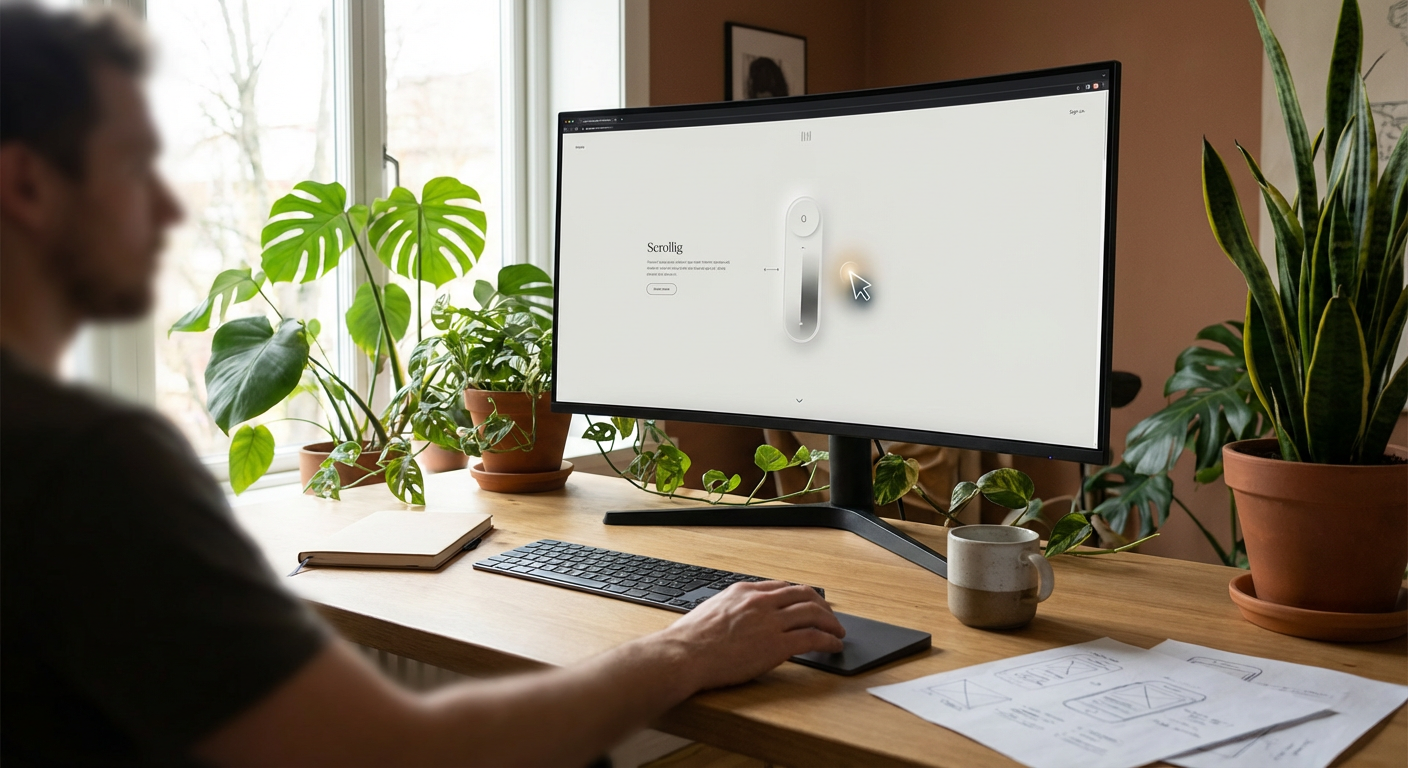
Let's be blunt: most business websites are glorified digital brochures. They sit there, static and expectant, like a particularly dull exhibit at a provincial museum. They tell visitors things, but they rarely engage them. In an era where attention spans are measured in nanoseconds and competition is a click away, just presenting information simply isn't cutting it anymore. You might as well print it on a pamphlet and leave it in a dusty rack.
Here at FunnelDonkey, we believe your website should be more than just a placeholder. It should be a dynamic sales assistant, a compelling storyteller, and an irresistible lead magnet. It should be a masterclass in web design in St. George that doesn't just look pretty, but performs.
And no, we're not talking about those obnoxious, screen-hogging pop-ups designed by the digital equivalent of a carnival barker. We're talking about sophisticated, subtle, and genuinely valuable interactive elements that transform a passive visitor into an active participant. This isn't just about bells and whistles; it's about strategic engagement that drives conversions without making your audience want to throw their device into a volcano.
Beyond Static Text: The Case for Interactive Web Design
Your customers are savvy. They’re inundated with content. Their BS detectors are finely tuned, especially when it comes to sales pitches that feel like a one-way lecture. A static page, no matter how well-written, often feels like exactly that: a lecture.
Interactive web design, on the other hand, invites dialogue. It shifts the dynamic from "I'm telling you" to "Let's explore this together." It creates a sense of shared discovery, making the visitor feel invested in the journey. This isn't just about aesthetics; it's about psychology. When people actively participate, they retain information better, trust more, and are far more likely to take the next step.
Consider the average user journey. They land on your site, skim, maybe read a paragraph or two. If nothing grabs them, they bounce. A high bounce rate isn't just a vanity metric; it's lost revenue. Interactive elements act like digital tripwires, gently pulling users deeper into your site, compelling them to spend more time, and ultimately, to convert.
The Anti-Pop-Up Playbook: Engagement Without Annoyance
Let's get one thing straight: we hate annoying pop-ups as much as you do. The kind that ambush you the second you land on a page, demanding your email before you've even had a chance to see what the site is about. That's not engagement; that's extortion. Our approach to web design in St. George is about intelligent interaction, strategically placed and genuinely useful.
We're talking about elements that add value, solve a problem, or present information in a more digestible, engaging format. Think of it as a subtle, elegant dance, not a clumsy shove. The goal is to enhance the user experience, not disrupt it.
"The best interactive elements don't just look good; they serve a purpose. They guide, they inform, they personalize. They make the user feel seen, understood, and valued, not just like another pair of eyeballs to monetize."
This philosophy underpins every project we undertake. We don't just build websites; we craft digital experiences that resonate with your target audience and deliver tangible results.
Interactive Tools That Actually Convert (Examples, Not Theories)
Forget the abstract. Let's talk about concrete examples of interactive elements that can transform your static site into a dynamic conversion machine. These aren't just for flashy tech companies; they're applicable to almost any business that wants to truly connect with its audience.
- Interactive Quizzes & Assessments: Imagine a real estate agent's site with a "Find Your Dream Home Style" quiz, or a financial advisor's site with a "Retirement Readiness Calculator." These tools don't just collect data; they provide instant value to the user, often revealing needs they didn't even know they had. The data you collect is a bonus, allowing for highly personalized follow-up.
- Configurators & Customization Tools: If your business offers products or services with various options, a configurator is gold. Think car builders, custom apparel designers, or even a service provider allowing users to build a custom package. This puts power in the user's hands, making them feel like they're creating their own solution, not just choosing from a predetermined menu.
- Dynamic Data Visualizations: Ditch the static charts and spreadsheets. If you're presenting data – market trends, case study results, product comparisons – use interactive graphs, animated infographics, or maps that respond to user input. Tools like Tableau or even simpler JavaScript libraries can make complex data clear and compelling.
- Guided Tours & Walkthroughs: For complex products, software, or even services, a guided tour can be infinitely more effective than a lengthy "how-to" page. Let users click through key features, understand benefits in context, and experience your offering firsthand. This reduces friction and builds confidence.
- Embedded Calculators & Estimators: This is a big one for many businesses. A mortgage calculator, a ROI estimator for a B2B service, or even a simple unit converter. We offer a website cost estimator for this very reason. These tools are inherently useful and keep users on your site longer, actively engaging while they get answers to their questions.
- Interactive Infographics: Instead of a long, scrolling image, break down complex information into clickable, expandable sections. This allows users to delve deeper into topics that interest them, without being overwhelmed by a wall of text.
- Story-Driven Pathways: For service-based businesses or those with a complex sales cycle, create a "choose your own adventure" style journey. "Are you a small business or an enterprise?" "Are you looking for X or Y?" Each choice leads them down a path tailored to their specific needs, making your content incredibly relevant.
These are just a few examples. The key is to think about what questions your audience has, what problems they're trying to solve, and how an interactive element can provide an immediate, satisfying answer or experience.
The SEO Sweet Spot: Why Google Loves Engagement
Let's talk about the elephant in the room: SEO. Many business owners worry that anything beyond static, keyword-stuffed text will hurt their rankings. This couldn't be further from the truth, especially when it comes to intelligent web design in St. George and beyond.
Google's algorithms are constantly evolving, and one of the biggest factors in ranking is user experience signals. What does that mean? It means Google wants to send users to websites where they find what they're looking for, spend time engaging with the content, and don't immediately bounce back to the search results.
- Increased Time on Page: Interactive elements naturally encourage users to spend more time on your site. They're clicking, configuring, calculating, and exploring. Longer time on page signals to Google that your content is valuable and relevant.
- Lower Bounce Rate: When users are engaged, they're less likely to hit the back button. A low bounce rate is a strong positive signal to search engines.
- Higher Click-Through Rates (CTR) from SERPs: If your meta description hints at an interactive tool or a unique experience, users are more likely to click. This is especially true if you can leverage schema markup to highlight these features.
- More Backlinks & Social Shares: Truly valuable interactive tools are often shared. "Check out this awesome calculator!" "Take this quiz to find your perfect product!" Organic sharing generates high-quality backlinks and social proof, both massive SEO boosters.
- Fresh Content & User-Generated Content: If your interactive elements allow for user input that can be publicly displayed (e.g., a community poll, a user-submitted design gallery), this constitutes fresh, unique content marketing – another huge win for SEO. Just be careful to manage this to avoid falling into the trap of duplicate content or low-quality contributions.
While some interactive elements might use JavaScript, potentially raising concerns (see our deep dive on JavaScript and SEO: When Modern Code Hurts Rankings), a well-structured site with a focus on user experience will almost always outweigh any minor technical complexities. The payoff in engagement and user satisfaction is simply too great to ignore.
Measuring Success: Analytics for Interactive Experiences
So, you've implemented some stunning interactive elements. Now what? You need to measure their impact. This isn't just about general traffic; it's about understanding how users interact with specific features and how those interactions contribute to your business goals. This is where funnel analytics become your best friend.
Traditional analytics tools like Google Analytics are powerful, but for interactive elements, you need to go a step further. We're talking about event tracking. You'll want to set up events for:
- Quiz Completions: How many users start and finish your quiz? What's the drop-off rate at each question?
- Calculator Submissions: How often are users using your estimator tools? Are they submitting their results?
- Configurator Usage: Which options are most popular? How long do users spend customizing?
- Interactive Map Clicks: Which regions or points of interest are most frequently explored?
- Video Playbacks & Progress: Beyond just playing, how much of your interactive video content are users watching?
By tracking these specific interactions, you gain invaluable insight into user behavior. You can identify which elements are resonating, which might need adjustment, and most importantly, how these interactions correlate with your conversion goals. Are people who complete your quiz more likely to request a demo? Do users who customize a product spend more? This granular data is the difference between guessing and strategic optimization.
The FunnelDonkey Difference: Strategic Interactive Web Design
Implementing effective interactive elements isn't just about having a talented developer. It's about a strategic approach that aligns these features with your business objectives and your customer's journey. This is where FunnelDonkey shines. We don't just build; we strategize, design, and optimize.
When you partner with us for web design in St. George, we start by understanding your audience, your sales funnel, and your unique value proposition. We then identify opportunities where interactivity can genuinely enhance the user experience and drive specific outcomes. It's about purposeful design, not just trendy features.
Our team comprises not just designers and developers, but also strategists who understand the psychology of conversion and the nuances of effective content marketing. We ensure that every interactive element is accessible, mobile-responsive, and seamlessly integrated into your overall site architecture.
Stop settling for a website that just sits there. Your digital presence should be a dynamic, engaging experience that captures attention, builds trust, and actively guides your visitors towards becoming paying customers. It's time to move beyond the brochure and embrace the power of intelligent web design in St. George that converts.
Ready to transform your passive website into an active revenue generator? Let's talk strategy. Discover how FunnelDonkey can craft a digital experience that resonates with your audience and delivers measurable results. Explore our services or schedule a consultation today. The future of your online presence is interactive, and we're here to build it.